Mobile Network Monitoring & 5G/LTE Performance Management for Venues
STOP LOSING STADIUM REVENUE DUE TO POOR MOBILE NETWORK CONNECTIVITY
Modern stadiums depend on reliable 4G and 5G connectivity to support thousands of spectators during major sporting events. From accessing digital tickets and making mobile payments to ordering food and streaming live videos, mobile networks play a major role in the stadium experience.
However, when thousands of fans connect simultaneously, mobile networks can experience congestion, weak signal coverage, reduced data speeds and increased latency. These issues can affect spectators, stadium operations and revenue-generating services.
RantCell Stadium Monitoring provides mobile network monitoring for venues, helping stadium operators, mobile network operators and engineering teams track cellular performance through automated smartphone-based testing, live KPI dashboards and indoor coverage surveys.
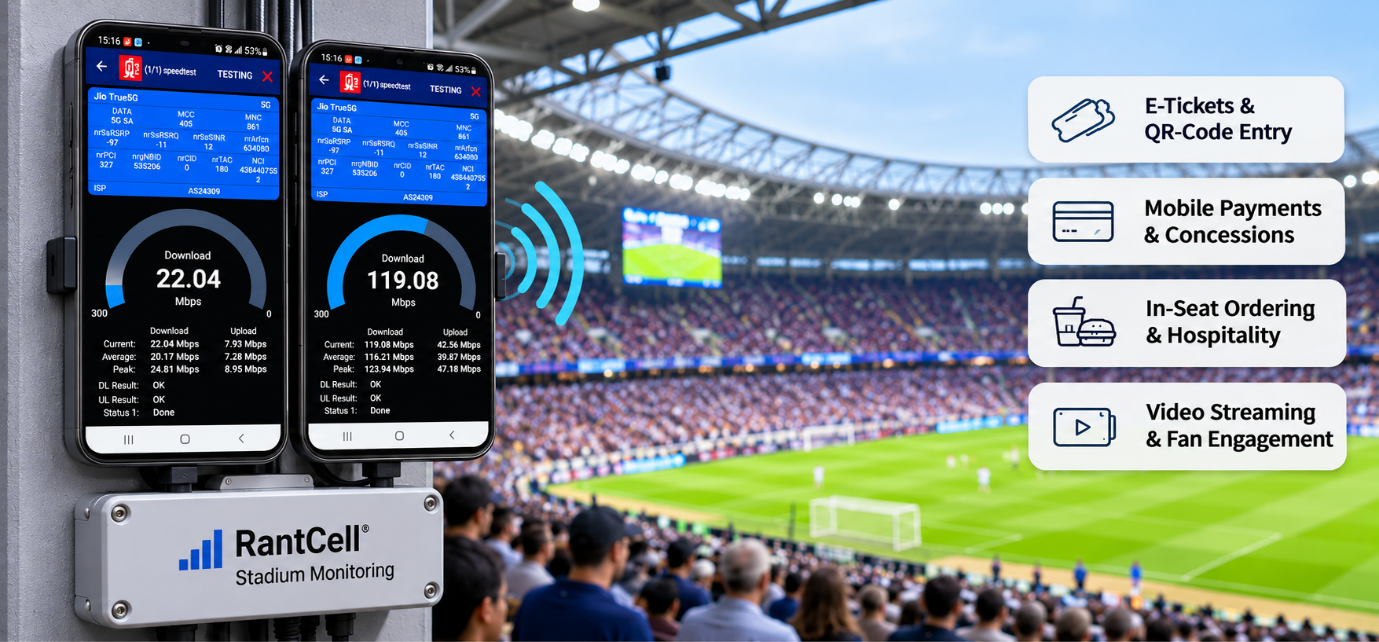
Figure 1: RantCell Smartphone-Based Cellular Monitoring in a Stadium Environment
The Challenge: Maintaining Reliable Connectivity During Stadium Events
Stadiums present a demanding environment for mobile networks. Network traffic can increase significantly before a match, during peak attendance and immediately after an event.
Traditional manual testing requires engineers to visit different stadium locations, collect measurements and investigate coverage problems. Repeating these activities across multiple seating zones, entrances, concourses and hospitality areas can consume valuable engineering hours.
Poor connectivity can also affect business-critical stadium services, including:
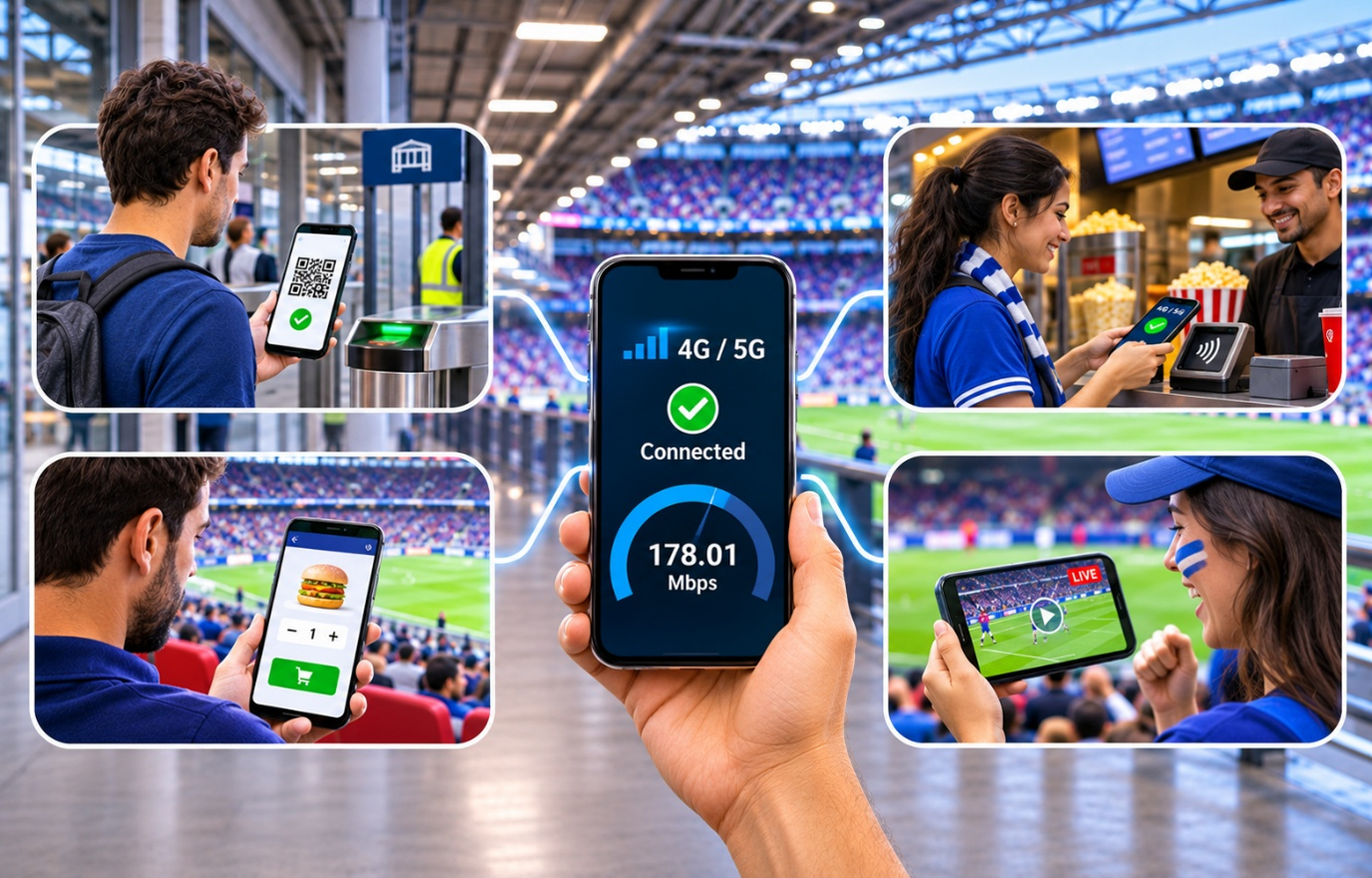
-
E-Tickets and QR-Code Entry: Slow mobile data can prevent spectators from accessing digital tickets, leading to delays at entry gates.
-
Mobile Payments and Concessions: Network problems can interrupt payment transactions at food, beverage and merchandise outlets.
-
In-Seat Ordering and Hospitality: Unreliable connectivity can affect digital ordering platforms and premium hospitality services.
-
Video Streaming and Fan Engagement: Reduced upload speeds and network congestion can affect live streaming, social media sharing and event applications.
For stadium operators, maintaining network performance is therefore closely linked to visitor satisfaction and commercial operations.
How RantCell Enables Continuous Stadium Monitoring
RantCell provides smartphone-based mobile network monitoring using compatible commercial Android devices as remotely managed testing probes.
These devices can be positioned at selected stadium locations to collect repeatable cellular measurements without requiring engineers to perform every test manually.
The solution supports:
-
Automated Cellular Testing: Schedule recurring measurements during normal stadium operations and major events.
-
Live KPI Monitoring: Track RSRP, SINR, download and upload throughput, and latency.
-
Automated Alarms: Configure KPI thresholds to identify network degradation, coverage gaps and outages.
-
Remote Probe Management:Monitor test devices remotely, including device and battery alerts.
-
Multi-Operator Comparison:Compare cellular performance across different mobile networks.
This approach helps engineering teams spend less time on repetitive measurements and more time investigating network issues.
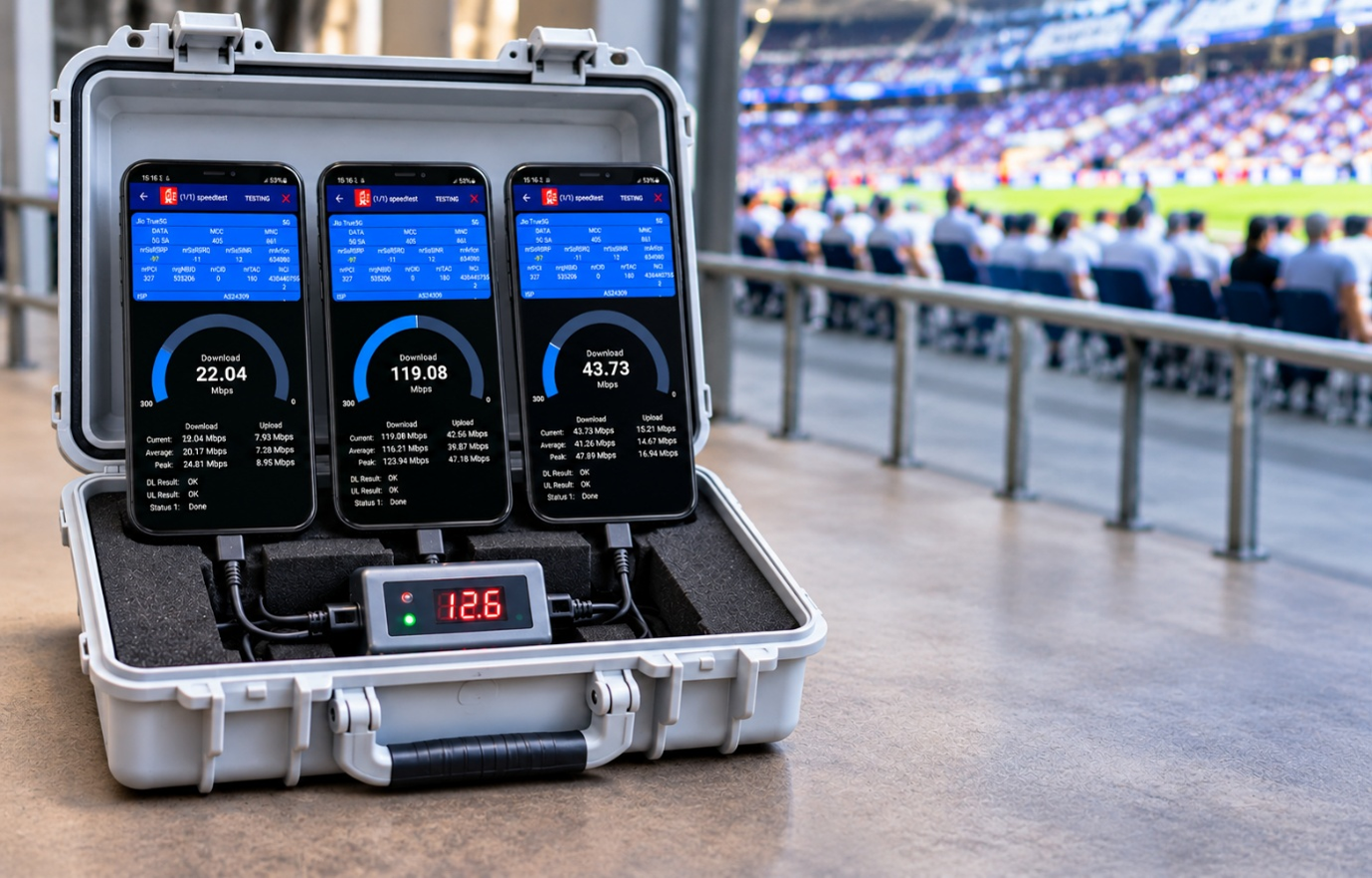
Figure 2: RantCell Smartphone Monitoring Probes for Continuous Stadium Network Testing
Live Stadium Monitoring Through a Centralised Dashboard enables dynamic optimisation.
One of the main challenges in stadium network management is understanding how cellular performance changes across different locations and operators during an event.
The RantCell monitoring dashboard supports mobile network performance monitoring by providing centralised visibility of measurements collected from deployed smartphones.
Engineering teams can review performance by operator, device, location and time. They can also investigate declining KPIs and compare network conditions before, during and after major events.
Historical measurements help identify recurring performance issues and support network optimisation decisions.
For example, if data throughput decreases in a particular stadium sector during peak attendance, engineers can review the corresponding signal quality, congestion, latency and monitoring results to investigate the affected area and dynamically optimise the network.
Our RantCell API can be integrated with OSS platforms for real time user feedback to carriers for implementing closed loop AI based radio network optimisation.
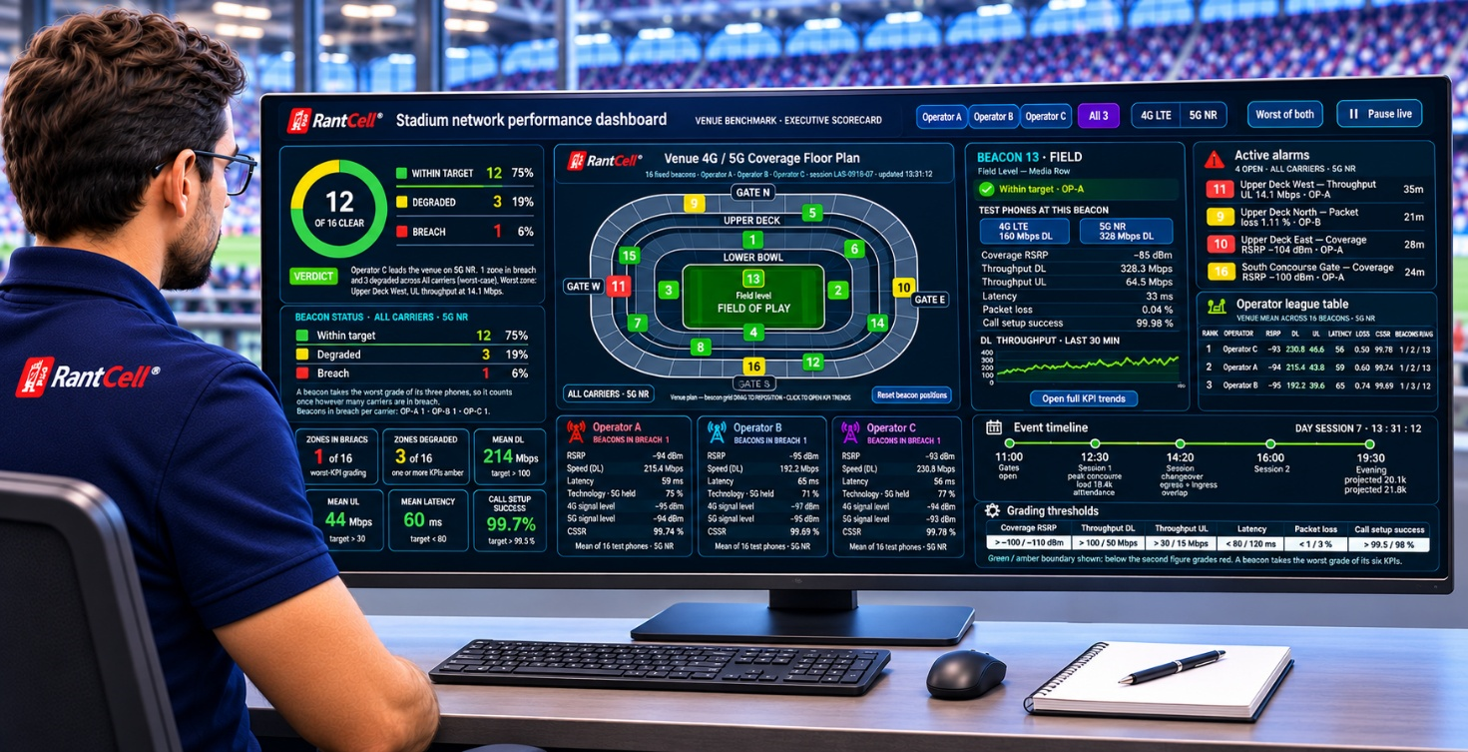
Figure 3: RantCell Stadium Live Monitoring Dashboard Showing Cellular Network KPIs
Indoor Floor Plan-Based Coverage Testing
Continuous monitoring provides measurements from selected probe locations, while indoor walk testing helps engineers investigate coverage across wider stadium areas.
RantCell supports floor plan-based indoor surveys, allowing engineers to map cellular measurements to stadium locations.
Walk tests can be conducted across seating sections, concourses, entrances, hospitality areas, indoor corridors and commercial outlets.
These surveys help engineers:
-
Identify weak cellular coverage areas.
-
Compare network performance across different operators.
-
Analyse signal quality along repeatable walking routes.
-
Validate improvements after network optimisation.
-
Investigate coverage around ticketing gates, payment counters and hospitality areas.
By combining indoor walk-test results with continuous monitoring data, engineering teams can develop a broader understanding of stadium cellular performance.
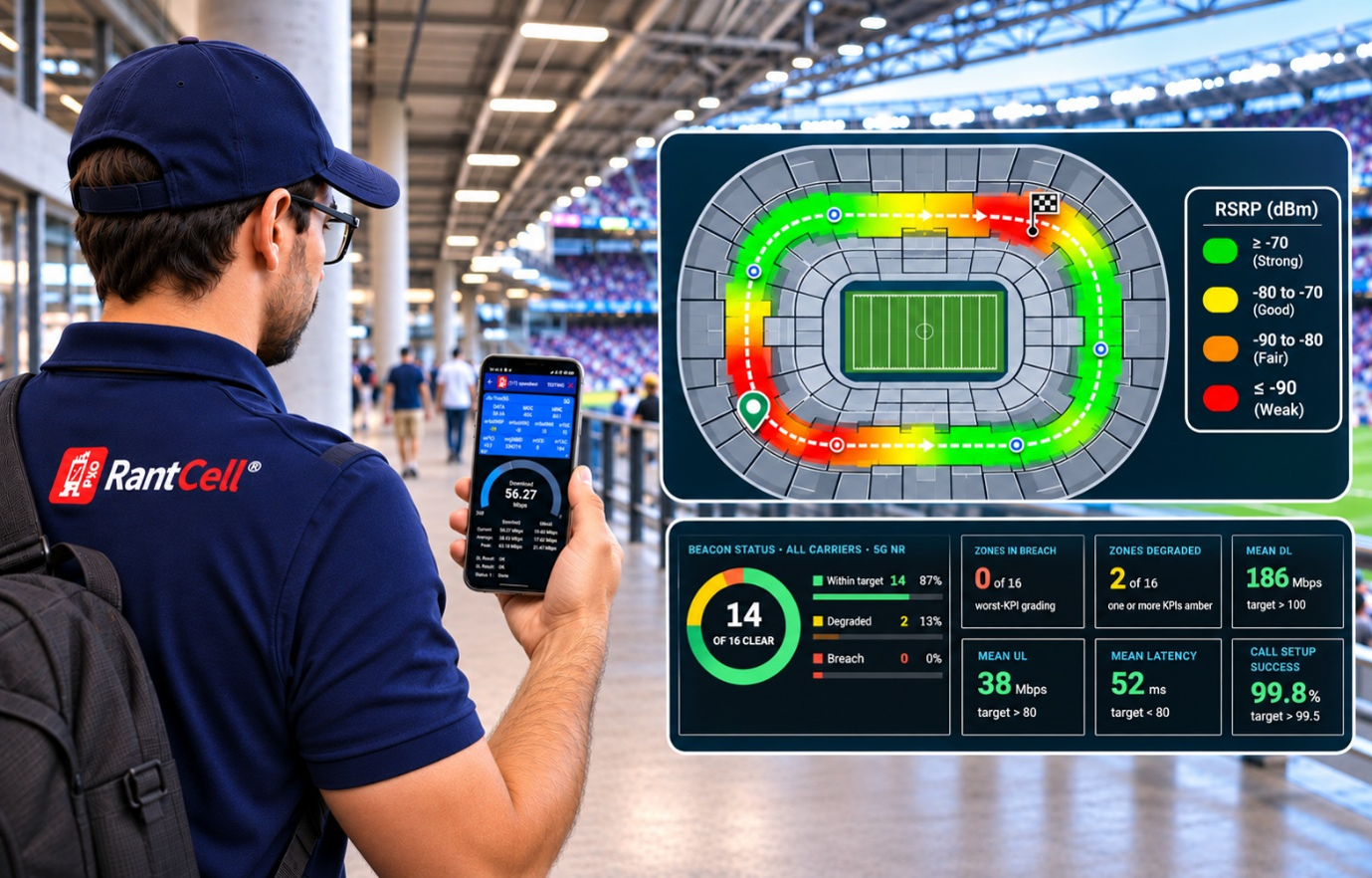
Figure 4: RantCell Indoor Floor Plan-Based Stadium Coverage Survey
The Real Challenge Is Maintaining Performance During Peak Attendance
A stadium network may perform well during routine operations but experience reduced performance when thousands of spectators arrive for a major event.
This makes continuous monitoring and event-based performance comparison useful for network engineering teams.
RantCell enables scheduled LTE network monitoring and 5G performance measurements before, during and after events, helping teams compare baseline performance with peak-demand conditions.
Monitoring can help identify:
-
Locations experiencing weak signal strength or poor signal quality and capacity issues.
-
Changes in download and upload speeds during peak attendance.
-
Increased latency affecting mobile applications.
-
Differences in performance between mobile operators.
-
Repeated network degradation in specific stadium sectors.
These measurements provide useful information for troubleshooting, capacity planning and future network improvements or RantCell API integration to perform AI based real time network optimisation.
What This Means for Stadium Operators and Mobile Network Providers
Reliable cellular connectivity supports both stadium operations and the spectator experience.
For stadium operators, monitoring helps identify network problems that could interrupt digital ticketing, mobile payments, merchandise purchases and other commercial services.
For mobile network operators, continuous measurements provide information to investigate coverage issues, assess service performance and validate network upgrades.
Automated testing can also reduce repetitive manual measurement activities, allowing RF engineers to focus on analysis and optimisation.
Historical performance data also supports mobile network performance management by helping operators assess capacity requirements, prioritise network improvements and plan infrastructure investments.
Figure 5: How Mobile Network Performance Can Affect Stadium Ticketing, Payments and Fan Engagement
Conclusion
Stadium connectivity is no longer limited to providing mobile coverage inside a venue. It also supports digital ticketing, cashless payments, hospitality services and the overall spectator experience.
As stadiums become increasingly dependent on mobile applications, maintaining reliable 4G and 5G performance during major events becomes a growing operational requirement.
RantCell Stadium Monitoring combines automated smartphone-based testing, live KPI dashboards, configurable alarms and indoor floor plan-based surveys to help engineering teams identify connectivity problems and monitor network performance.
The main advantage is straightforward: reduce repetitive manual testing, identify network degradation earlier and make better-informed decisions about stadium network performance.
To understand how RantCell can support continuous stadium monitoring, indoor coverage testing, multi-operator benchmarking and automated 4G/5G network measurements, request a demo here:
https://rantcell.com/request-for-demo.html